The Last of Us Part II
On the Battle Formats picker, ask which existing rules the highlighted format will change and where a newcomer can inspect them. Format rules and optional access settings have different owners.
Borrow the principle, adapt the mechanism, or keep the case as reference?
Follow one studio’s decision from the player’s question to the control they shipped. Start at the estate’s Options entry, then compare the reasons behind an adjustable preset, a team scoreboard and a touch puzzle.
A small diamond sits beside Campaign. Battle and the other destinations sit in a quiet column beside the lit serpent. The frame records the marker’s position; its input cause is unverified.
On the Battle Formats picker, ask which existing rules the highlighted format will change and where a newcomer can inspect them. Format rules and optional access settings have different owners.
For the 1v1 battle HUD, compare the same public fact for both sides. Keep either side’s private choices out. Record the same two questions against the existing capture and a grayscale variant.
On the Estate, let a visual state change and a sound refer to one known event. Ask what happened with audio on and off. Add another cue only if it answers an observed need.
Compare what the player can infer. The scale labels describe the production context of each example.
These editorial top tens compare eleven documented productions from 1990–2023, including later revisions. Each ordering weighs the stated problem, the visible mechanism or the applicability of the lesson according to the selected view. The three Snake Eyes picks can differ from the first three historical ranks. The pool favors traceable public sources with images. It underrepresents unpublished failures, older console documentation and games without English material. Award scope is reported separately, and the AA label describes an estimated production scale. A still records a visible state. A designer’s account records a reason. Neither measures how a Snake Eyes player will perform.
Each entry links to the image and the feature evidence. Award badges name the recognized category. The saved direction records the director’s own choices.
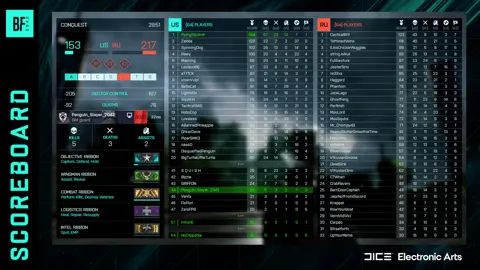 Multiplayer first-person shooterBattlefield 2042Compare the launch-era capture, the labeled proposal and the March release note.
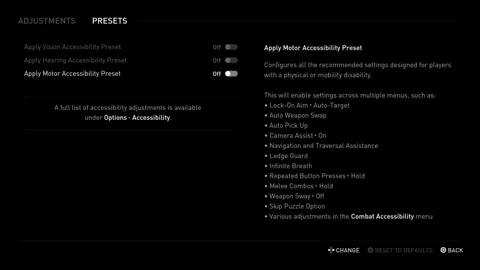 Action adventureThe Last of Us Part IIRead the developer’s configuration problem alongside a capture of the actual control.
 Musical path puzzleRytmosRead the two cofounders’ account of drawing a route to make music. Compare it with a photographed puzzle face.
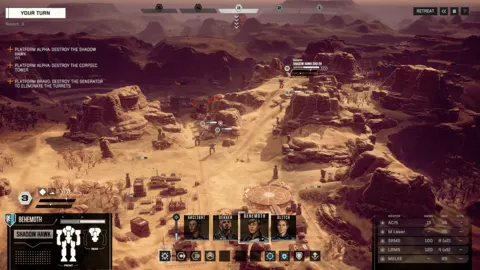 Turn-based mech tacticsBATTLETECHPair the developer’s explicit turn-order goals with its beta explanation and a frame from the released game’s store gallery.
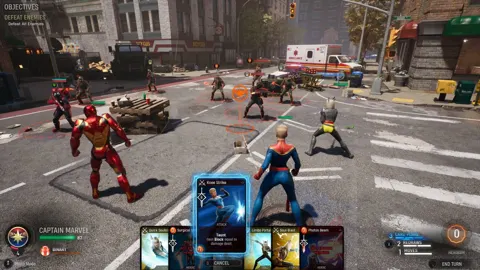 Superhero tactical RPGMarvel’s Midnight SunsCompare selecting a hero ability with Gonzales’s separate example of sharing functionality across screens.
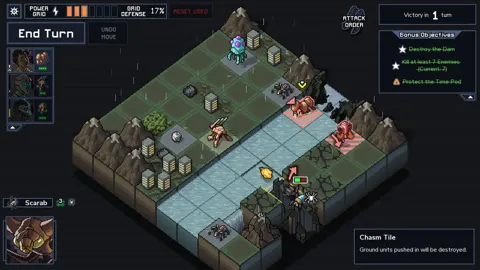 Grid tactics puzzleInto the BreachCompare the desktop chasm explanation with the founders’ account of adapting crowded windows and a separately sourced phone image.
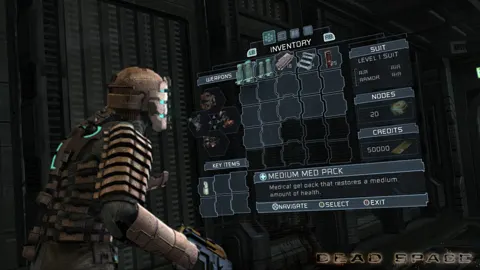 Survival horrorDead SpaceTrace a status readout from its fictional object to the position the camera usually gives it.
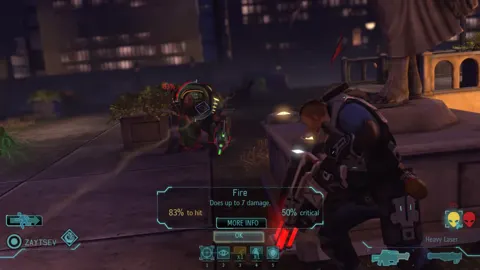 Turn-based tactical strategyXCOM: Enemy UnknownRead a Fire preview alongside producer Garth DeAngelis’s explanation of positioning decisions.
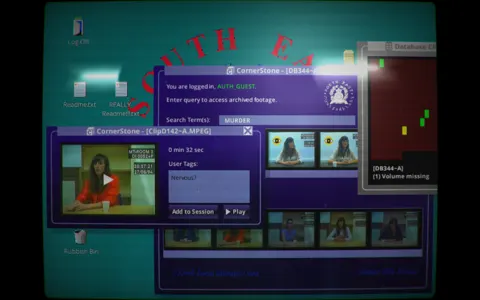 Investigative narrative / FMVHer StoryCompare the player’s query, the returned clips and the note attached to an individual clip.
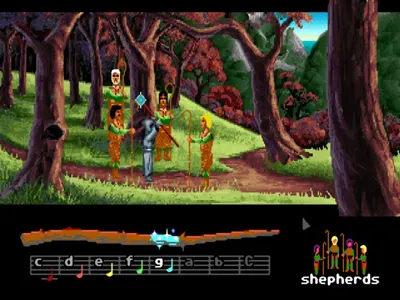 Musical graphic adventureLoomRead the original design goal alongside the staff, selected target and note sequence.
Compare the launch-era capture, the labeled proposal and the March release note.
March gives each team a player list and puts match totals and personal numbers in a separate block. The January drawing still combined all 128 entries. The November capture grouped squads and showed personal stats.
Read the developer’s configuration problem alongside a capture of the actual control.
Vision, Hearing and Motor occupy three rows. Motor is focused and Off. Its panel lists consequences across menus, including changing repeated button presses to a hold. The lower-left hint gives the route to individual settings.
Read the two cofounders’ account of drawing a route to make music. Compare it with a photographed puzzle face.
A path runs across an exposed cube face between visible markers. The creators explain that hitting emitters triggers sounds and solving levels adds layers. The still records the path geometry.
Pair the developer’s explicit turn-order goals with its beta explanation and a frame from the released game’s store gallery.
A highlighted phase 3 sits between 5 and 1 at the top. Behemoth’s named portrait, her Shadow Hawk’s Front and Rear silhouettes and a separate weapon table occupy different parts of the screen.
Compare selecting a hero ability with Gonzales’s separate example of sharing functionality across screens.
In the combat frame Knee Strike rises from a hand, a target marker remains on the battlefield and a corner displays the turn resources. The engineering slide places two menus together to illustrate sharing.
Compare the desktop chasm explanation with the founders’ account of adapting crowded windows and a separately sourced phone image.
The PC board shows a terrain tooltip explaining a fatal push for ground units alongside objectives. On the iPhone listing a snow-covered board has End Turn and an attack-order control at opposite sides.
Trace a status readout from its fictional object to the position the camera usually gives it.
Isaac’s lit spine faces the camera during combat. In the inventory frame the display projects into open space to his right. Producer Chuck Beaver describes both the on-body health display and the use of that space for menus.
Read a Fire preview alongside producer Garth DeAngelis’s explanation of positioning decisions.
The targeting panel gives an 83 percent chance to hit, up to 7 damage and a 50 percent critical chance. More Info and OK remain available. Another frame draws a grenade’s possible footprint.
Compare the player’s query, the returned clips and the note attached to an individual clip.
The computer shows MURDER in the search box, several results and a separate clip detail with a user tag. Barlow describes writing a layered story so that clips could be interpreted in different orders.
Read the original design goal alongside the staff, selected target and note sequence.
The forest screen names the shepherds and shows a lettered staff with colored notes. Lucasfilm documents that learned four-note drafts act on a chosen target and quotes the original manual’s wish for players to finish the adventure.
Loading saved references…