SNAKE EYESINTERFACE ATLAS
Workbook / Study 02 of 28

Whose experience are we designing for?

40 questions · solo workbook

Foundation review after Study 3, question 41. See the review plan ↗

Question index ⌄

1. Before you play

01What are you trying to do in the game at the moment you want to study?02Which way of checking would answer your question?03What exact build, dated picture or remembered session are you using?04Which part of your usual setup matters for this attempt?05What did you already know about this screen before you looked at it today?

2. Find the sound settings

06Which row does the menu mark before your first input?07Which destination do you expect will let you change the sound?08What on the menu makes you expect your chosen input will open that destination?09What path did the marker actually take to the row you activated?10What was the first visible response after you activated that row?11Where did the marker land when you used Back from the settled page?12Which stretch of that route, if any, felt slow to you?

3. Read the Classic battle

13Whose turn do you read when you return to this frame?14What, if anything, has the game told you about the result of the roll?15Which words or marks did you actually look at to answer?16Which part of your answer came from knowing the rules before you saw the frame?17What would you choose to do while the board is in this state?18Before trying it, what do you expect one press on Attack to do here?19If you tried that input in a matching live state, what visibly changed first?

4. Explain a pause

20What could a silent screen recording show about the moment before Keep editing was chosen?21What two different goals could account for that same pause?22What would you ask yourself right after a pause like that to find out what it meant?23Before you finish your own portrait pair, what do you expect to see the next time you open it?24If you saved and reopened a disposable local profile, what did the two cards actually show?

5. Read a shipped example

25What is one input the game records in the training display?26Where can you find a visible consequence of play in the same image?27What would you still need to know before calling one of those inputs a mistake?28If Back takes you somewhere unexpected in Snake Eyes, which two events would you record separately?

6. Compare one thing

29What single detail will you vary for this comparison?30What will you hold steady so the two attempts are comparable?31What did you already know on the second pass because of what you tried first?32At the same point in the second pass, what was the clearest difference you noticed?33What do you think accounts for the pattern across your two passes?34What else could explain the difference you noticed?35What single observation on your next pass would separate those two explanations?

7. Your decision for the Architect

36Which part of that moment would you want to preserve even if you could make the task faster?37What one detail do you choose to keep, revise or leave open today?38What specific moment should the Architect look at to understand your decision?39What result from another solo attempt would make you reconsider that choice?40What question about someone else’s experience belongs in Part 2?
Review & turn in →
Group 6 of 7 · Compare one thing

Choose the moment that mattered most in your own pass and revisit it on paper or from the same starting state in the game.

Question 34 of 40 · Alternative

What else could explain the difference you noticed?

Consider familiarity or an interruption alongside your first explanation. If both passes matched, ask what might have stayed hidden.

Open this question’s reading and materials ↓
What was it like for you?

What could explain your second impression besides the one detail you changed?

Try this question on three Snake Eyes screens

Finish your first prediction, then choose a screen. Describe one cue, one thing you did and how that moment felt.

Collection · Compare Remnants

In Compare Remnants, study the same pair twice, once with the other columns covered. How does that change what you notice or value?
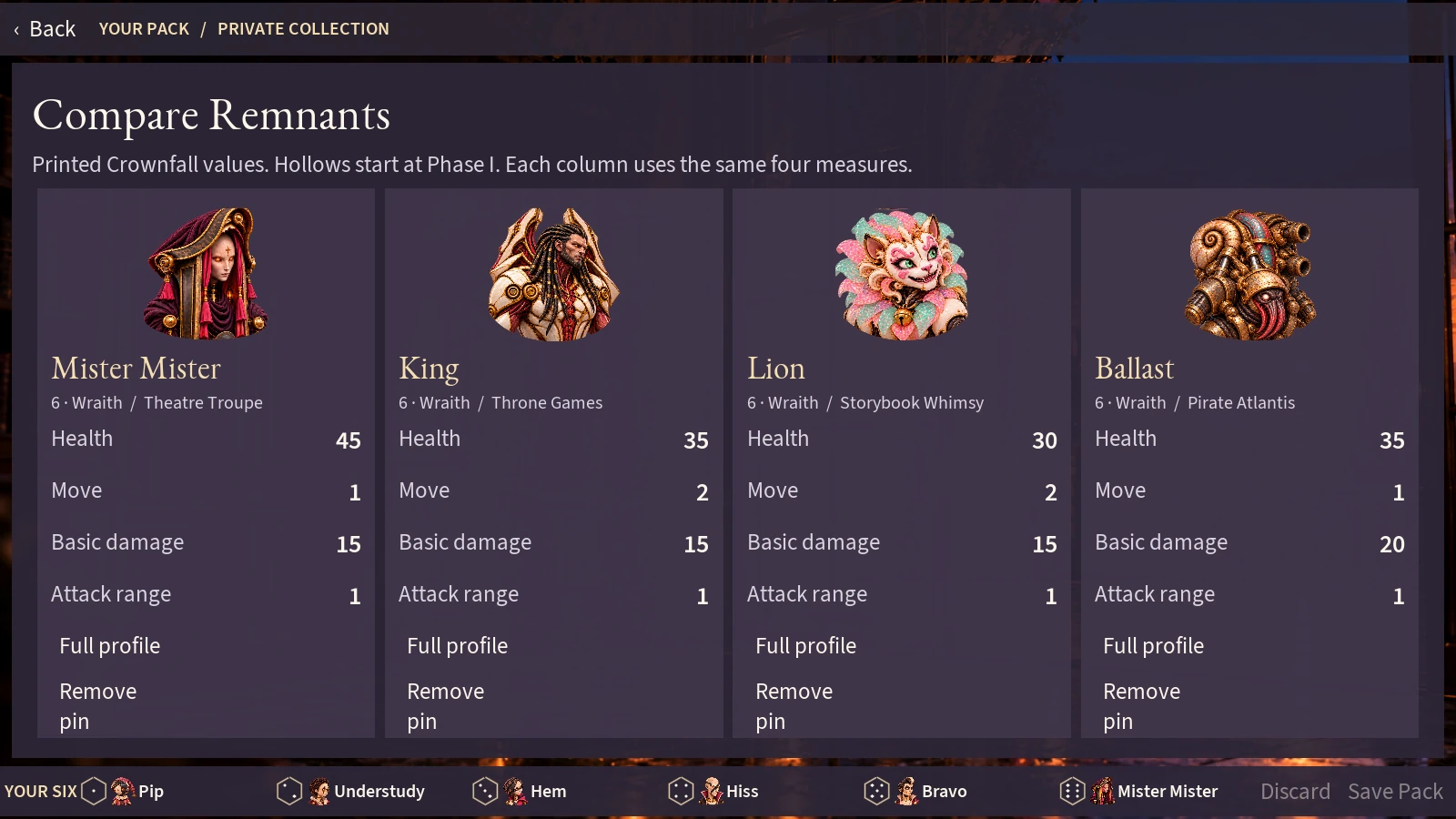
Four pinned Remnants share a row for each printed stat. The current six remain visible below the comparison.R32 Release · four pinned Remnants · dated reference, 2 November 2026Open the field guide and ranked references ↗
WATCH AT YOUR DESK

Watch for this. Keep the observed events fixed and propose a second cause. Prior exposure, an interruption or a different starting focus could produce a similar account.

Change one thing and look again18 sec · English captions
Chapters, transcript and source

Run two comparable attempts and leave room for familiarity to explain a difference.

Keep the same candidates, row and question throughout. Say what would count as an observable difference.

The choices and values stay the same in this example. The amount visible around the pair changes.

Name the order of your attempts, whether the first one provided practice, and a next observation that could distinguish the explanations.

Snake Eyes R32 Windows release captures, 2 November 2026. The moving brackets and enlarged details annotate archival stills. The method cards illustrate a solo exercise.

After watching. Which part of your evidence fits both explanations?

Section plan · about 12–23 minutes

Make a small comparison you can explain later

Repeat one personally available pass with the same goal and start. Change precisely one thing, such as moving the pointer away from the estate or exposing a clearer reason in a paper variant. Record the order and anything you remembered from the first pass. If the second run improved despite a different starting state, name that difference rather than crediting your change.

Bring back · A two-row account of first act, visible response and felt effort or pleasure. Write one competing explanation for any difference.

One set of captures serves this entire section. Open the question that collects them →

Your one-session handoff to the Architect ↗ · Begin at “During the pass, record the first action.” Review the paragraph after it for the observation that could separate two explanations.

In the studio

Hear direction and proximity as two different facts · 0:24

The team describes two signals while a red car follows the circuit. Listen for where to steer and for the warning that the car is nearing the track edge. Those cues answer different questions.

The edge alert warns of proximity. It does not certify an off-track event. This excerpt illustrates the developers’ method and cannot establish that these sounds suit a different player or game.Xbox / Turn 10 Studios · Forza Motorsport, Blind Driving Assists · full source ↗
Full lesson, readings and screenings →

Opening your private answer space…