SNAKE EYESINTERFACE ATLAS
Workbook / Study 03 of 28

How to study a studio decision

41 questions · solo workbook

Foundation review after Study 3, question 41. See the review plan ↗

Question index ⌄

1. Make a case from evidence

01Where could you return to see the exact moment you are discussing?02What question is the player trying to answer at that moment?03What does one input actually change in this example?04What evidence supports your account of why the studio made that choice?05What simpler explanation would fit the same screen?

2. Read the preset before applying it

06What in the July 2020 PS4 capture tells you whether the Motor preset has been applied?07What difficulty did Matthew Gallant say the three presets were intended to solve?08What is one change across menus that you could predict before applying a preset?09If the preset is almost right, what can the player do about a single unwanted setting?10Whose stated reason for using the individual settings changes how you read the preset?11What claim about this particular menu remains open after the game’s December 2020 accessibility award?

3. Read a patch across two dates

12Whose deaths can you already find in the November 2021 capture?13What direct comparison did the team columns make possible in March 2022?14Which modes did the Update 3.3 notes actually name for the split layout?15Which fact would you read on the left to tell how the match itself is going?16Which part of the scoreboard change was still promised when 3.3 shipped?17What about the immediately preceding build can neither of these two dated images settle?

4. Try transferring the reasoning

18What comparison need is shared by the Battlefield scoreboard and the four-Remnant Collection view?19What could you borrow from Rytmos after taking its touch gesture away?20What did Joel Gonzales’s tooltip example establish about the Midnight Suns team’s work?21Which of the four craft examples makes it easiest for you to recover turn ownership and one public value?22What would a permanent two-team scoreboard crowd out during this 1v1 decision?23What observable need would make you reconsider keeping the full scoreboard as reference?

5. Run the two estate entries

24Which estate version are you opening first?25Before your first input, what do you expect to change when you try Reduced motion and hints On?26What was the first action you actually took to reach the requested pair?27What happened to Camera travel when you changed only Training hints back to Off?28Which operation restored your original Cinematic and Off values?29After the other route, which one made its effects easier for you to predict?

6. Find a public value and return

30On returning to the board, what public turn state do you read before touching anything?31Where do you expect to find Hem’s exact health before your first action?32Which cue actually gave you Hem’s health on this pass?33What helped you regain your place after returning to the board?34What did the inspection step cost or give you compared with the always-visible value?35If you repeat this after a break in reverse order, what would you hold fixed?

7. Record your own decision

36What is your present disposition for the estate preset?37What is your present disposition for the arena comparison?38Which part of your conclusion is supported only by your paper run?39Which one claim would require your own observation in an identified Unreal build?40What status should the Architect record for the idea today?41What question about another person’s experience do you want to carry into Part 2?
Review & turn in →
Group 1 of 7 · Make a case from evidence

Pick one reference you admire or use Standard Crownfall in the format selector. Page 10 of the companion is the blank case card.

Question 03 of 41 · Observation

What does one input actually change in this example?

Describe the action and its visible consequence in one sentence.

Open this question’s reading and materials ↓
What was it like for you?

What can you support from the example, and which feeling would you still need to ask someone about?

Try this question on three Snake Eyes screens

Finish your first prediction, then choose a screen. Describe one cue, one thing you did and how that moment felt.

Estate home

Point to one feature of the estate entrance. What feeling would you check in your own run before explaining its purpose?
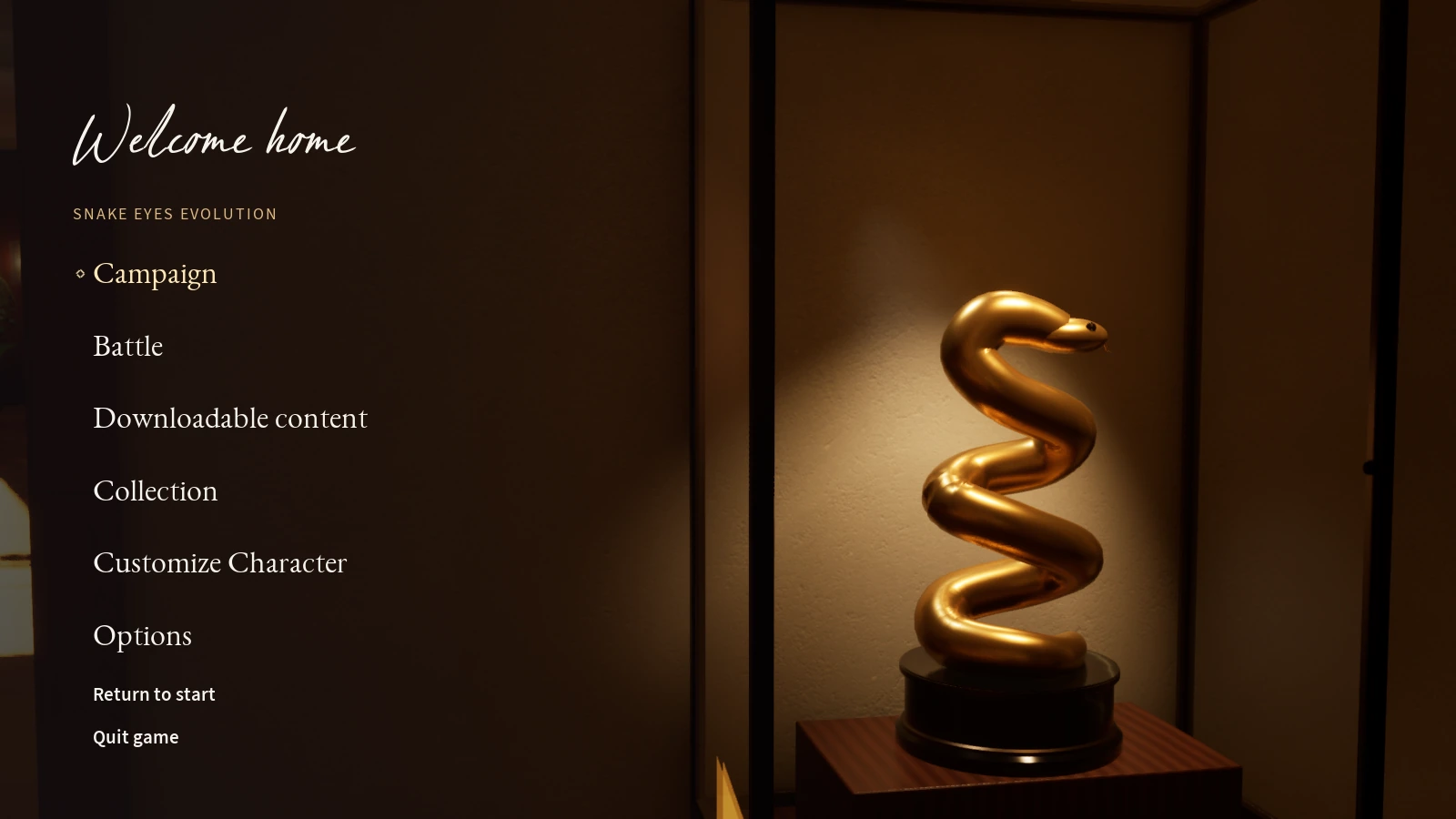
Welcome home. A small marker sits beside Campaign, with a list of destinations to the left of a gold serpent.R32 Release · Welcome home · dated reference, 2 November 2026Open the field guide and ranked references ↗
WATCH AT YOUR DESK

Watch for this. Trace one input to one visible consequence in the source. If you have a single image, identify the extra evidence the transition would require.

What counts as evidence of studio intent?18 sec · English captions
Chapters, transcript and source

Use three layers of a case card to separate a source, a mechanism and a proposed explanation.

A date or timestamp lets someone revisit the same evidence. An image and a developer account can support different statements.

Use the same attribute row in each column. Being able to point to that operation gives you a mechanism to discuss.

Keep a simpler explanation beside the one you favor. The source may settle what was built without settling its designers’ reasons.

Snake Eyes R32 Windows release captures, 2 November 2026. The moving brackets and enlarged details annotate archival stills. Original teaching diagrams refer to the credited sources in the workbook and gallery. Use those sources for original game images or developer testimony. The method cards illustrate a solo exercise.

After watching. Where does the observable change begin and end?

Section plan · about 9–17 minutes

Read a piece of evidence within its scope

Cover the right half of the R32 format selector and name the player’s question. Reveal the explanation while keeping Continue visible. Make three distinct statements about what the frame shows, what a creator actually said and what you predict. If you have no creator account for this particular choice, record that unknown. Test your explanation against an ordinary template reused for convenience.

Bring back · A miniature case card with one mechanism, a credible competing account and one piece of reasoning you could defend if the art were removed.

How to read a design decision ↗ · Read the four paragraphs from intent through transfer. Stop before the format-selector example and try it yourself.

Full lesson, readings and screenings →

Opening your private answer space…