
Open Street Fighter 6 in the observation gallery and look at the training frame before reading the study notes.
If Back takes you somewhere unexpected in Snake Eyes, which two events would you record separately?
Borrow the distinction you just used in the training screen.
Open this question’s reading and materials ↓What would a picture leave you guessing about even after you can describe the controls?
Try this question on three Snake Eyes screens
Finish your first prediction, then choose a screen. Describe one cue, one thing you did and how that moment felt.
Move the estate marker one row. What would a list of your inputs miss about how that movement felt?
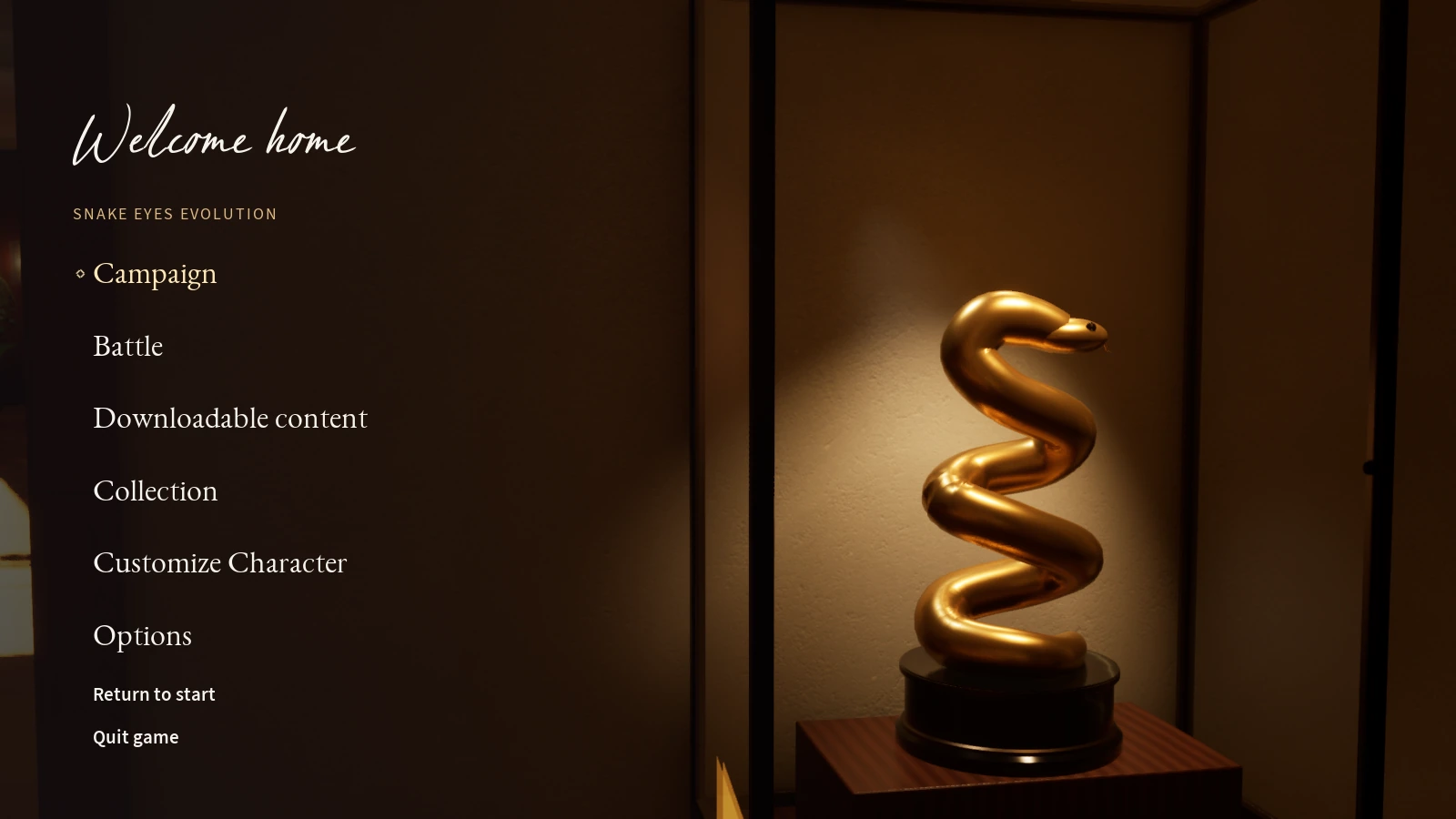 R32 Release · Welcome home · dated reference, 2 November 2026Open the field guide and ranked references ↗
Watch for this. Apply the training-screen distinction to Back in Snake Eyes. Name the input event and a separate screen or focus change that you could check afterward.
Chapters, transcript and source
Apply the Street Fighter 6 training-screen distinction to one Snake Eyes action.
Use the Capcom training image in the workbook gallery to identify a direction or button. The source card points you to that evidence.
The move a player wanted belongs in a separate note. A recorded button alone cannot explain an intention.
In your live run, record what you pressed and what appeared next. Then describe what you had wanted the press to achieve.
Snake Eyes R32 Windows release captures, 2 November 2026. The moving brackets and enlarged details annotate archival stills. Original teaching diagrams refer to the credited sources in the workbook and gallery. Use those sources for original game images or developer testimony. The method cards illustrate a solo exercise.After watching. What would you still have to explain in your own words?
Section plan · about 10–21 minutes
Read a field observation without reading a stranger’s mind
Choose one gallery reference. Street Fighter 6 shows registered inputs, Pentiment offers a text choice, and Forza Motorsport adds cues to road information. Describe one action or displayed value, list two explanations for a plausible pause and phrase a neutral question for an actual player. When using the Forza clip, listen for the steering and track-boundary cues separately. For a dialogue alternative, Laura Kate Dale describes her reading preferences alongside 2024 Until Dawn settings. Identify a personal statement, a visible option and a cut in the review.
Bring back · A three-line reference note with a precise source, its task and the difference between a fact visible or audible there and your interpretation.
Visual fieldwork ↗ · Under “Visual fieldwork,” read “What can you see happen?” and the next paragraph on a neutral follow-up. Open the screenshot or clip before its editorial caption.
In the studio
Hear direction and proximity as two different facts · 0:24
The team describes two signals while a red car follows the circuit. Listen for where to steer and for the warning that the car is nearing the track edge. Those cues answer different questions.
The edge alert warns of proximity. It does not certify an off-track event. This excerpt illustrates the developers’ method and cannot establish that these sounds suit a different player or game.Xbox / Turn 10 Studios · Forza Motorsport, Blind Driving Assists · full source ↗Interrupt play to inspect the current character · 0:18
Follow the cut from the snowy exterior to Mike’s Character Info, then to the evidence tabs. Which information tells a returning player who they are following?
The source title calls this a pause menu. Its first visible panel is Character Info. The physical control, precise simulation state and focus on return are outside this excerpt.Game Dev References · original PS4 gameplay, Supermassive Games / Sony Computer Entertainment · full source ↗Adjust subtitle presentation in the PS5 rebuild · 0:41
Watch the General options, a speaking character in the scene and the return to Accessibility settings. Dale describes subtitle size, names, background opacity and an alternate font, then discusses transcripts for interactions.
This is Dale’s edited review of the 2024 PS5 version. Her font preference is personal. The cuts do not demonstrate an uninterrupted settings-to-gameplay test or the 2015 PS4 controls.Laura Kate Dale · Access-Ability, Until Dawn PS5 Accessibility Review · full source ↗Opening your private answer space…