
Read from “Learning to see a shared problem” through the four craft examples. Page 9 works through the full-scoreboard proposal.
What would a permanent two-team scoreboard crowd out during this 1v1 decision?
Use the player question in the opponent-turn frame. You can disagree with the worked rejection.
Open this question’s reading and materials ↓Which part of the experience you value could survive a completely different layout?
Try this question on three Snake Eyes screens
Finish your first prediction, then choose a screen. Describe one cue, one thing you did and how that moment felt.
Cover the portraits in Compare Remnants, then uncover them. How do they affect what feels important about choosing between these pieces?
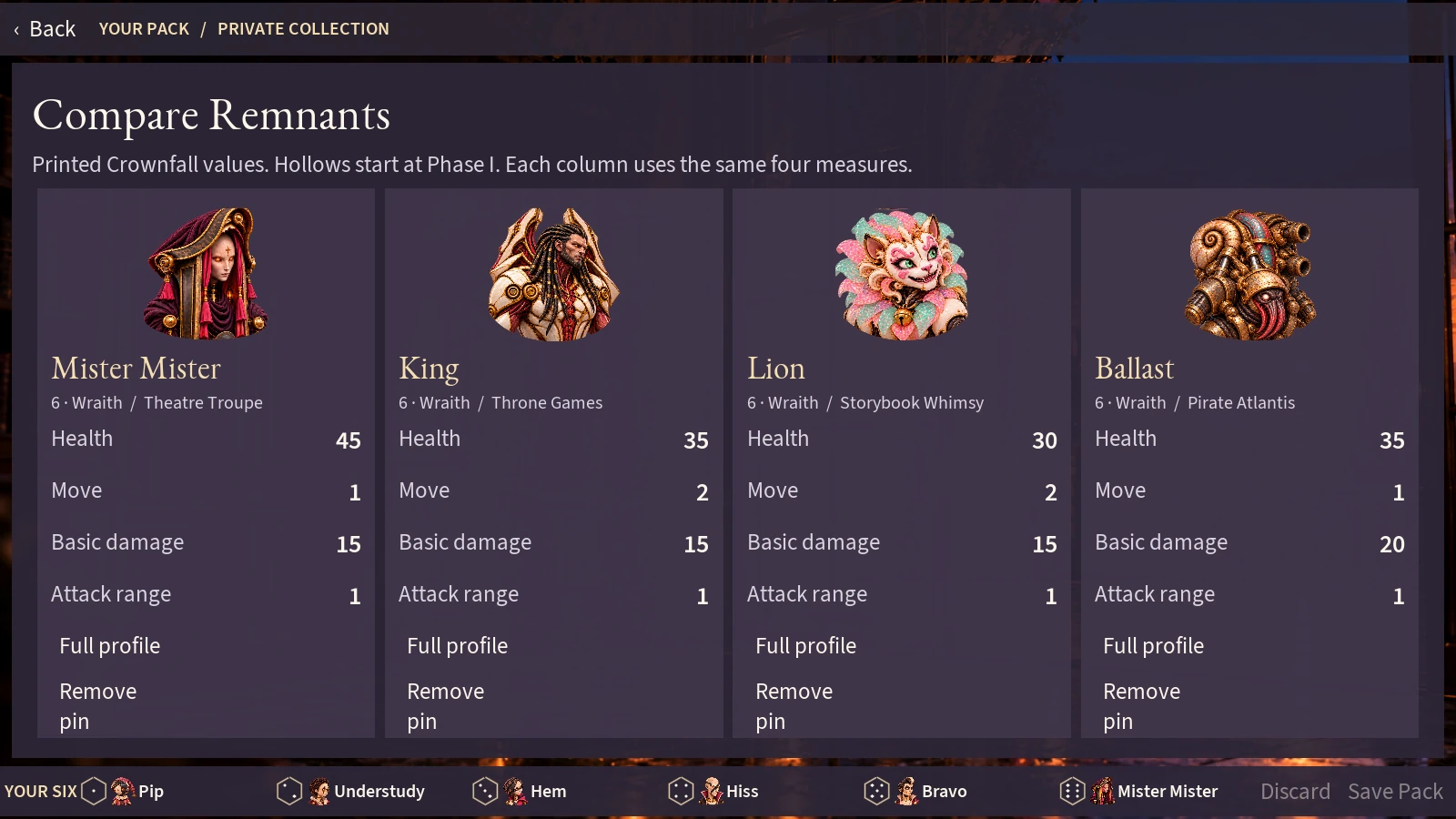 R32 Release · four pinned Remnants · dated reference, 2 November 2026Open the field guide and ranked references ↗
Watch for this. Imagine the space the full two-team table would occupy on a one-on-one board. Identify what you would want to see underneath it during a decision.
Chapters, transcript and source
Carry a source’s useful comparison into a new task and examine what would get in the way.
Ignore the artwork for a moment. Name the two things you compare and the context you want to keep in sight.
A full scoreboard may show more facts than this decision requires. Decide what it would help you see and what it would cover.
A reason can survive a change of genre even when the original widget does not. Keep a counterexample with your recommendation.
Snake Eyes R32 Windows release captures, 2 November 2026. The moving brackets and enlarged details annotate archival stills. The method cards illustrate a solo exercise. The arena excerpt shows board geometry only, to preserve the later blind paper comparison.After watching. What real comparison would justify keeping that space covered?
Section plan · about 13–26 minutes
Transfer a relationship, then try to break it
Cover the game titles and complete “I need to compare ___ while keeping ___ available” for each of two screens. Then watch Gonzales explain the Cycler and layered item display. Draw what is shared, what each host supplies and where a new host would need an exception. Decide whether your initial pairing shared the same player problem, the same production responsibility or only an appearance.
Bring back · Two dependency sketches, one local exception and a sentence explaining what a player test would still need to establish.
Learning to see a shared problem ↗ · Start with “Learning to see a shared problem,” including the two-story comparison. Continue to “The Midnight Suns production lesson” for the tooltip example and training costs.
In the studio
One next/previous control, two screens · 1:09
Follow the arrow input in Gonzales’s example. The component steps through a list, passes on the changed character and lets the screen refresh. He then names mission selection as another place his team used the same behavior.
The presentation explains Firaxis’s production approach. It supplies neither player-test results nor evidence that Snake Eyes uses the same component.Joel Gonzales · Unreal Engine, Unreal Fest Orlando 2025 · full source ↗An item takes on different meanings in different places · 0:52
Watch the item icon recur in the Chest, Inventory and Store diagrams. The surrounding marks change when the relevant question changes. The consumable example adds a quantity.
Gonzales presents a teaching diagram with hypothetical items. The diagram does not identify the actual inventory rules of Marvel’s Midnight Suns or validate a shop for Snake Eyes.Joel Gonzales · Unreal Engine, Unreal Fest Orlando 2025 · full source ↗Opening your private answer space…